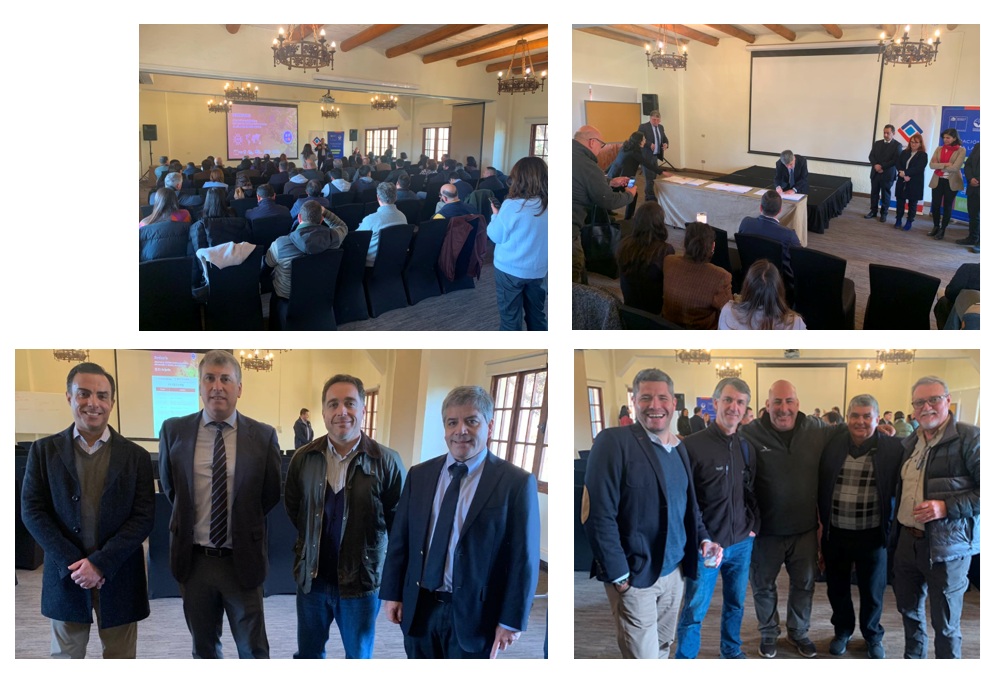
With a massive turnout of around 100 partakers, the Hotel Santa Cruz in the VI Region became the hub of a historic event for the Chilean prune sector:
The presentation of processing plant certifications and the signing of the new Clean Production Agreement (APL) for the implementation of the Sustainability Standard for the primary production of prunes. This achievement, led by Chileprunes, involves the participation Chile Origen Consciente (Chile Conscious Origin) Program of the Ministry of Agriculture.
The event was notable for its high-level political and technical turnout, bringing together producers, representatives from processing plants, and strategic partners, along with prominent officials from the public and trade sectors. Among the attendees were Carlos Valdés, Regional Minister for Agriculture; Paulina Valderrama, Acting Director of ProChile; and Andrés Gálmez, Executive Director of FIA, all of whom strongly supported this push toward greater competitiveness in the sector.
Pedro Pablo Díaz, President of Chileprunes, welcomed attendees to the event, noting that Chile’s prune industry operates quietly and is not widely known, but that, globally, it is the best.
Two Milestones for the Industry
The first milestone of the day was the official presentation of the ChOC Certification to the first eight processing companies that successfully met the requirements of the Cleaner Production Agreement (APL) at the facility level.
These companies are Pacific Nut, Prunesco, Sofruco, Sunsweet, Superfruit, Goodvalley, Agrícola La Palma, and Procesadora y Deshidratadora Colchagua, which together account for 68% of national production. The certification of processing plants and the certification process for farms are essential for continuing to strengthen the competitiveness and sustainability of the Chilean prune industry.
In addition, and with an eye toward the future of the value chain, the meeting served as the setting for the official signing of the APL by new primary production companies. This step solidifies a strong sector-wide commitment aimed at standardizing environmental best practices starting from the very source of the fruit.
The latest progress report revealed that the APL Properties is currently in the midst of its membership drive, with 6 companies and more than 15 properties already on board, prompting a call to members to incorporate their orchards and engage their supplier networks. Meanwhile, the APL Plants segment is already in its second enrollment period with four additional companies on board: Agrícola Siemel, Mercofrut, Agrícola El Parrón, and Los Montes. To obtain the right to use the ChOC Certificate on the final packaging, companies are strictly required to certify both their farms and their processing plants, thereby ensuring traceability.
Talks and what’s to Come
During the event’s talks, Karina Orellana of the Inter-American Institute for Cooperation on Agriculture (IICA) discussed “Digital Alternatives for Sustainability Management,” offering valuable optimization tools for the agricultural sector. Later, Marcelo Werneck, a researcher at UC, spoke about the value of quality certification and local origin, noting that “they positively influence consumer perceptions and increase their willingness to pay a premium price. This increase can offset the associated costs.”
Chileprunes highlighted the high turnout for these activities and reiterated the invitation to producers and industry stakeholders to join the upcoming sessions. In the short term, on June 17, an event will be held at UPL, featuring a technical update on pest management. In this way, the development of an increasingly professionalized industry—prepared to meet the demands of international markets—continues to be strengthened.