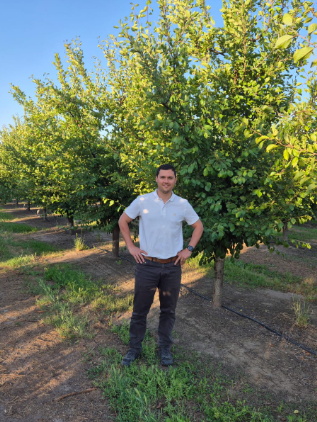
José Tomás Quezada, general manager of Agrícola Siemel, has an optimistic but realistic view of the future of the Chilean prune industry. Although supply is projected to increase by nearly 20% between 2025 and 2030, this growth poses the challenge of continue to develop markets and maintaining the balance between supply and demand in order to sustain prices and profitability over time.
“Over the last decade, international demand has remained stable, although without significant growth,” says Quezada. “China has played an important role as a destination, offsetting lower demand from other markets.
At the same time, investments are being made in India with the aim of promoting Chilean prunes in that country. Through the association, ChilePrunes member companies are developing a promotional campaign aimed at increasing consumption. This work could replicate, in a way, what was done in China a decade ago, which is now showing excellent results.
In Chile, everything indicates that production will continue to grow in the short and medium term. This growth in supply is due to the fact that nurseries are currently developing plum trees to replace existing orchards and for new projects that expand the country’s productive area. If this pace continues, by 2030 Chile could reach around 16,500 planted hectares, compared to the current 13,500 hectares of European plum trees. The O’Higgins Region has the largest area, with almost 10,000 hectares, equivalent to more than 70% of the national total.
A European plum tree takes 3 to 4 years to reach full production and can be productive for 20 to 25 years.
In 2025, total prune production reached 112,500 metric tons (MT), of which 14,000 MT were used for fresh fruit (dry equivalents), while 98,500 MT were available for the dehydrated industry.
“The supply of prunes could grow around 20% in the coming years. The business remains attractive, but requires a long-term view: being sustainable, searching for new markets, strengthening marketing channels, developing innovative presentations and standardizing quality are key factors in maintaining profitability,” he says.
José Tomás Quezada concludes that the Chilean prune industry is experiencing a time of opportunities and challenges, where the key will be to continue improving productivity, strengthening international promotion, and consolidating a sustainable supply that allows Chile to remain competitive in the long term. “With coordinated work between producers, exporters, and trade associations, the sector can continue to grow in a balanced manner and consolidate its global projection, maintaining Chile as the world’s largest producer and exporter of prunes, an achievement that few national agricultural industries have attained.”